

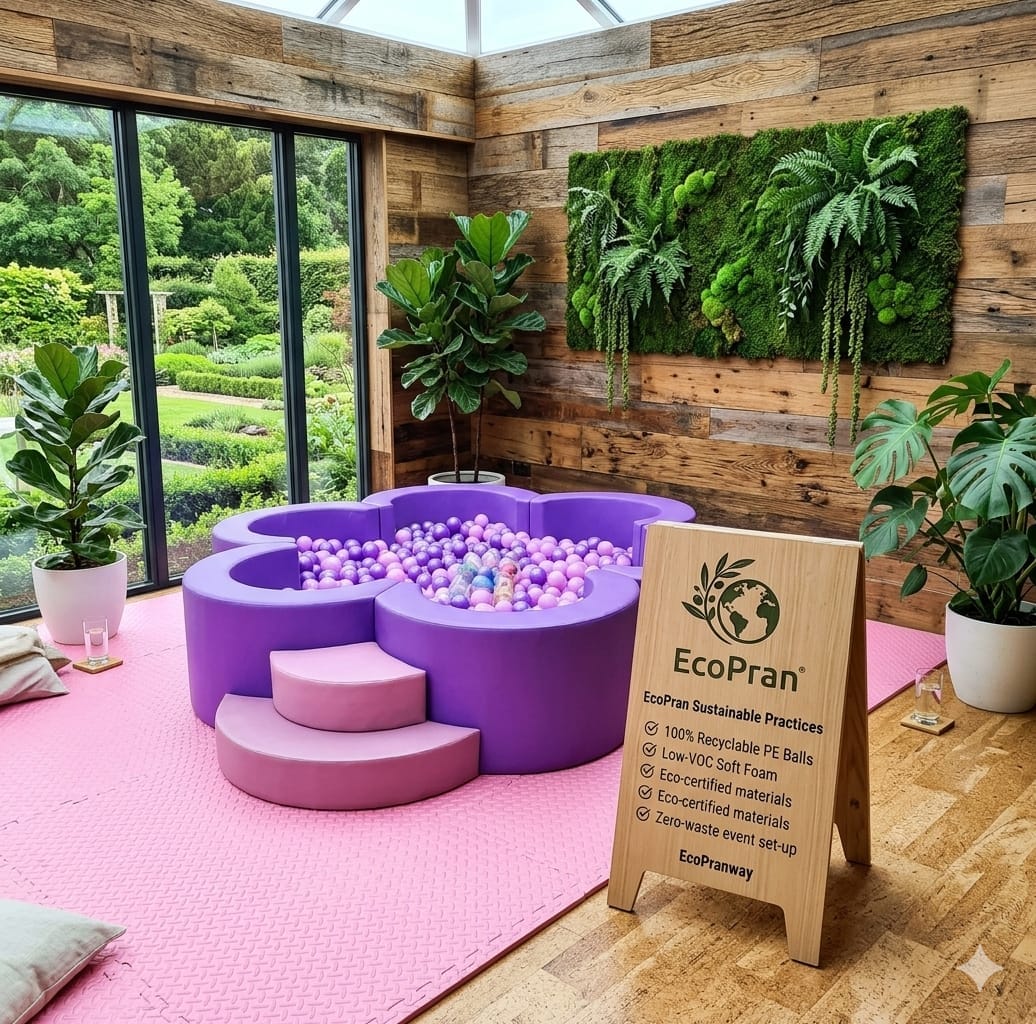
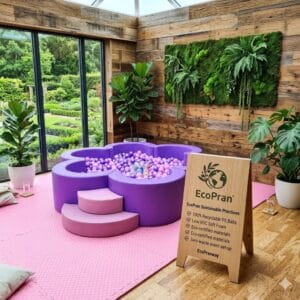
A ball pit like this flower-shaped one serves as more than just a fun centerpiece; it is a highly functional tool for Sensory Processing and Early Childhood Development.
Here is why this type of equipment is necessary for a high-quality play environment:
1. Sensory Integration & “Deep Pressure”
Many children find the feeling of being “immersed” in a ball pit very calming. The balls provide proprioceptive input (pressure on the joints and muscles), which helps kids understand where their body is in space. This “deep pressure” is often used to help children self-regulate, calm down after high energy, or improve their focus.
2. Physical Coordination & Strength
While it looks effortless, moving through a ball pit is a full-body workout for a toddler.
-
Core Stability: Simply sitting or trying to stand in a sea of moving balls requires constant micro-adjustments of the core muscles.
-
Balance: Navigating the uneven surface helps develop the vestibular system (the sense of balance).
-
Motor Planning: Getting in and out via the steps requires coordination and leg strength.
3. Visual and Tactile Discovery
-
Color Recognition: Sorting or identifying the different shades of purple and pink balls is a great way to practice early math and categorization skills.
-
Tactile Variety: The contrast between the smooth, hard balls and the soft, cushioned walls of the flower pit provides a variety of textures for a child to explore, which is vital for brain development in the early years.
4. Safe “Risk-Taking”
Ball pits offer a safe environment for children to experiment with movement. They can fall, jump, or “swim” without the fear of getting hurt. This builds confidence—a child who feels safe to fall is more likely to try new, more complex movements later on.
5. Therapeutic Benefits
In a school or therapy setting, ball pits are often used for:
-
Improving hand-eye coordination (tossing and catching the balls).
-
Reducing tactile defensiveness (helping kids get used to different sensations).
-
Encouraging social play, as a ball pit often becomes a shared “island” where kids must navigate personal space with others.
A Note on the Environment: The use of natural wood walls and living moss art in this space (as shown in the image) is a great choice. It creates a “biophilic” design that reduces stress and makes the indoor play area feel more connected to the outdoors, which has been shown to improve a child’s attention span and mood.
Reviews
There are no reviews yet.